Beautiful Lives, what does it mean to be human?

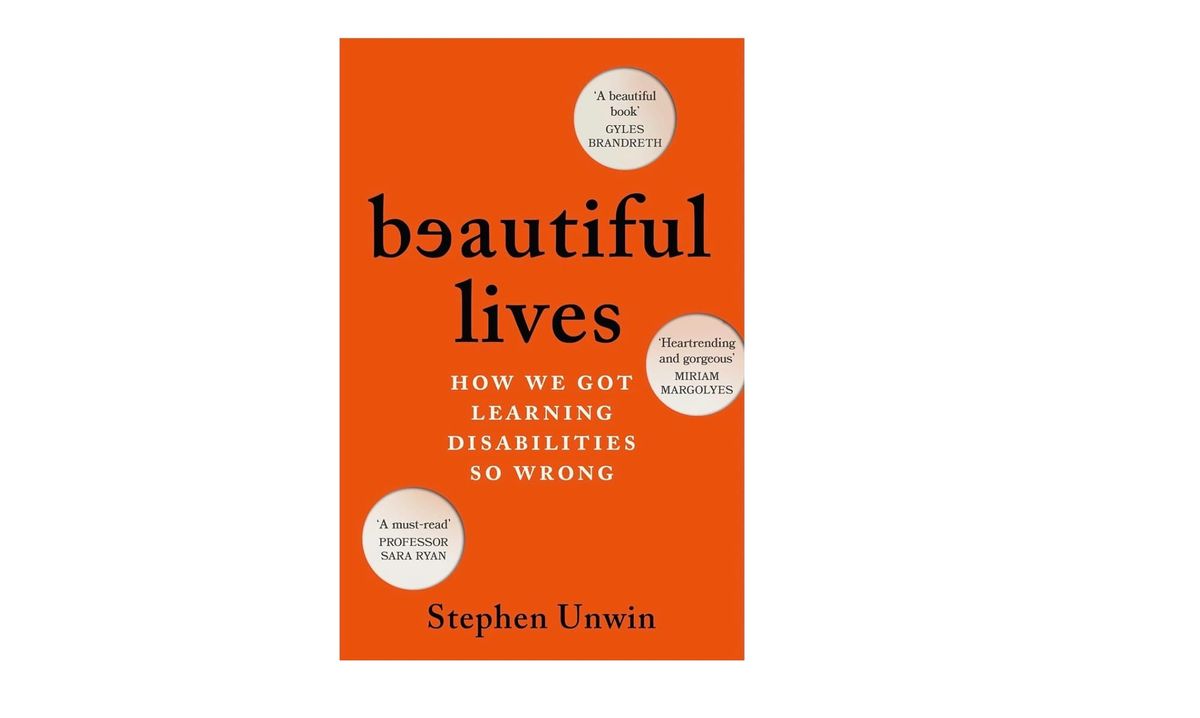
What does it mean to be human? Much is known about how we have evolved to become a species that is prosocial and able to explore in order to gain more knowledge about our world. But this exploration and care only seem to apply to our outer landscapes, not our inner ones. When it comes to what makes us human on the inside, the working definition is very narrow; framed around intellect, productivity and performance. Our need to connect is forgotten. The essence of what makes us human, and not simply an autonomous agent, is our need to care, connect, co-regulate and co-validate. Without these, we lose meaning in life.
So why is it that we, as the ‘more able’ in society, consider those ‘less able’ as somewhat ‘less worthy’ of the connection, co-regulation and co-validation that we ourselves rely on, and offer instead the minimum in the felt sense of ‘care’, barely distinguishable from pity at times? Why do we care so little for their inner lives, just because they can’t perform to our normative expectations? Why are we so incurious about how beautiful their lives might be on the inside?
Unless you are a parent of a child with a disability, you probably feel that this question doesn’t, thankfully, apply to you. I would argue that it applies more than ever, especially if you have ever experienced not feeling ‘good enough’ or ‘worthy’, or seen someone you care about treated that way.
Perhaps, as Stephen Unwin frames it, you believe that the injustices that people experience are not due to “bad people doing bad things,” but by “bad ideas and bad systems.” Perhaps you believe we’ve learnt lessons from the past and things are better now. Perhaps you don’t feel that learning about the history of people at the margins of society has anything to do with your life.
You’d be right to think that most societal inequalities, thankfully, have on paper at least, disappeared. Positive and negative experiences are societal contagions. And when they’re systemic, they affect everyone’s life. Not just ‘those SEND families over there’. The societal injustices that Stephen writes about haven’t disappeared, they have given rise to a movement that argues for a different value of human life. A championing of the inner world, not just outer achievement. And whilst the topic may not be central to your life, the question of what makes us human does. Which is why it is a book for all of us.
Beautiful Lives is Stephen Unwin’s unflinching journey through 250 years of ‘dealing with’ people with learning disabilities. Whilst there is no doubt that the families of individuals did their best for their loved ones, they did so inside a system that was either excluding or trying to contain those it deemed less worthy. Echoes of those patterns resonate today. Whilst Victorian institutional confinement and twentieth-century eugenic horror have long gone, you don’t have to go back far to surface care scandals such as Whorlton Hall and Winterbourne View.
We are still trying to ‘deal with’ individuals with learning disabilities. We don’t explicitly exclude them, of course. Unless you consider the disproportionate number of children with learning disabilities or SEN who are expelled from mainstream school. Nor do we contain them. Unless you count forcing parents between a rock and a hard place of schools that point to insufficient government provision and say they ‘cannot meet needs’ (find another placement).
No, no exclusion or containment happening today. We say we want children to be ‘included’, but it is clear that they don’t belong. And this crisis of lack of belonging isn’t only about the school system or the mainstream-versus-SEN provision argument. It is a fundamentally deficit-based model that doesn’t make way for our children’s full potential to be realised.
Stephen’s book is not easy to engage with, not because it is academically dense, but because it is ethically dense. The pattern that emerges is consistent enough to be uncomfortable: repeated cycles of harm, often rationalised by the dominant ideas of the time. Unwin’s central claim is straightforward:
Society has consistently privileged intellectual ability. Thus, individuals with learning disabilities have had to take their place at the opposite end of what we all, especially, perhaps, the well-educated, have been taught to treasure.
He writes as a father as well as a historian, but avoids turning the book into an exercise in blame. He references a striking historical phrase from Karl Koenig, the Austrian-born paediatrician who founded the first Camphill Community in 1940. Koenig described the children he served as “refugees from a society which did not want to accept them as part of their community.” Read in a contemporary SEND context, that framing stings with familiarity to every parent with a child with additional needs.
What distinguishes the book is that it does not remain in critique. Alongside the history of exclusion, there is a parallel history of people trying to build alternatives. Families advocating. Practitioners developing new approaches and supporting meaningful lives. Educators and clinicians working against the prevailing assumptions of their time. None of this is presented as heroic exception. It is simply evidence that alongside the people doing bad things in bad systems built on bad ideas, there were, and are, people doing good things, designing good systems built on good ideas.
The conceptual shift Unwin returns to is the move from inclusion to belonging. Inclusion is structurally lopsided. It signals admission, pulling people into a system they cannot function in without help. Belonging is more foundational. It assumes membership. It assumes you are part of the club. It is not conditional on performance or conformity to a norm.
That distinction matters. It changes where the burden sits. Inclusion asks how we bring people in. Belonging asks why they were ever positioned as outside in the first place. When I spoke to Stephen after reading the book, I asked him about his vision for the future. He shared the following.
First, a more realistic but fully realised view of capability, rather than a normative or romantic view of performance. Capability shouldn’t be defined by diagnostic category, but by actual conditions, supports, and environmental fit. Labels are administrative tools. They are not descriptions of potential, or for that matter of intrinsic worth.
Second, a rejection of both false optimism and unpleasant negativity. Both disregard reality. One ignores difficulty; the other ignores agency and basic dignity. The practical work sits in taking a holistic view of the individual, not the gap against the norm. Not only will our children fail to meet these criteria, but we’ll fail to see their full potential, free of man-made judgement and constraints.
Third, a shift towards being more human. Not people as productivity units, but people as relational and constitutive participants in social systems. Value here is not earned through output; it is recognised as inherent. You belong, you have value.
Fourth, and more broadly, a cultural revolution. A reorientation away from systems that treat productivity as the primary measure of human worth, toward systems that recognise social connection, interdependence, and contribution in more socially sustainable ways.
At this point the argument extends beyond disability. The same operating logic that has historically marginalised people with learning disabilities is not confined to SEND systems. It is embedded in education, in workplaces, and increasingly in the design logic of technology systems themselves. Anything that reduces human value to output will eventually misrepresent most of human life, because most human life is not output-driven in any stable or complete sense.
From Aristotle to positive psychology, neuroscience, and beyond, the consistent finding is that our human bonds are what make life worth living. There is growing psychological evidence that interpersonal mattering, the sense of being significant to specific others, contributes to the experience of meaning in life over and above other factors (Guthrie et al., 2025). If feeling important to specific people matters this much, then a large part of what we currently measure as ‘success’ is misaligned with what produces a meaningful life.
Beautiful Lives does not attempt to solve this. It is explicit about that limitation. It provides a historical and conceptual account rather than an implementation model. The operational question of how these ideas change classrooms, care systems, workplaces, and everyday interactions is left open.
The underlying question is whether we are prepared to adjust how we assign value at all. Because the children and adults so often positioned at the margins of ‘normal’ systems are not failing to meet the standard. They are revealing that the standard itself is incomplete.
The relevance to all of us is whether we are prepared to learn about the bad systems and bad ideas so that we can be the champions of good systems and good ideas. Those good ideas and systems have historically come from ordinary people achieving extraordinary things.
Simply by asking what if we valued people in a different way. What if all lives were beautiful lives, and if we stopped to ask and to notice, we would see that this is already true.
Stephen Unwin, Beautiful Lives: How We Got Learning Disabilities So Wrong: The Startling and Rarely Told History of Learning Disabilities. Quoted in conversation with the author’s permission.
Guthrie, D., Maffly-Kipp, J., Gause, C., Kim, J., Martela, F., & Hicks, J. A. (2025). Interpersonal mattering and the experience of meaning in life. The Journal of Positive Psychology, 20(1), 136–150.